

How can we determine whether an intervention truly improves road safety around a school? Assessing conditions before and after an intervention allows us to identify changes and generate evidence to guide future actions.
This process has now been completed at the first two schools where the Road Safety Education Is Everyone’s Responsibility has been put into action. The Safety Is Cool program has been implemented in Chile at the Juan Pablo II School in the municipality of Nogales, and the General José Velásquez Bórquez School in the municipality of Puchuncaví, both in the region of Valparaíso.
The project combined infrastructure improvements, road safety education, and the Star Rating for Schools (SR4S) methodology (developed by iRAP) to identify risks, determine the necessary interventions, and evaluate their results. SR4S rates the safety of school environments on a 1-to-5-star scale and uses decimal scores to measure improvements more precisely, even within the same star-rating category.
First We Measure, Then We Act
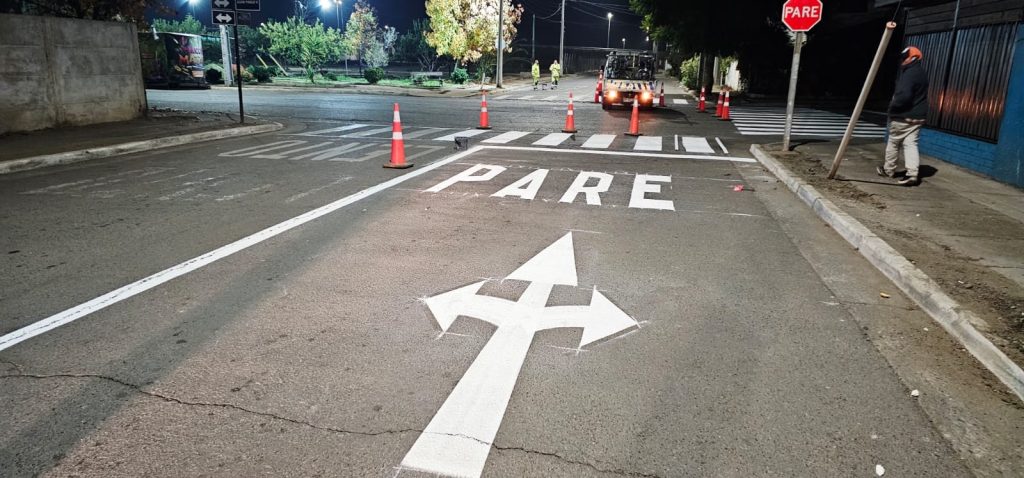
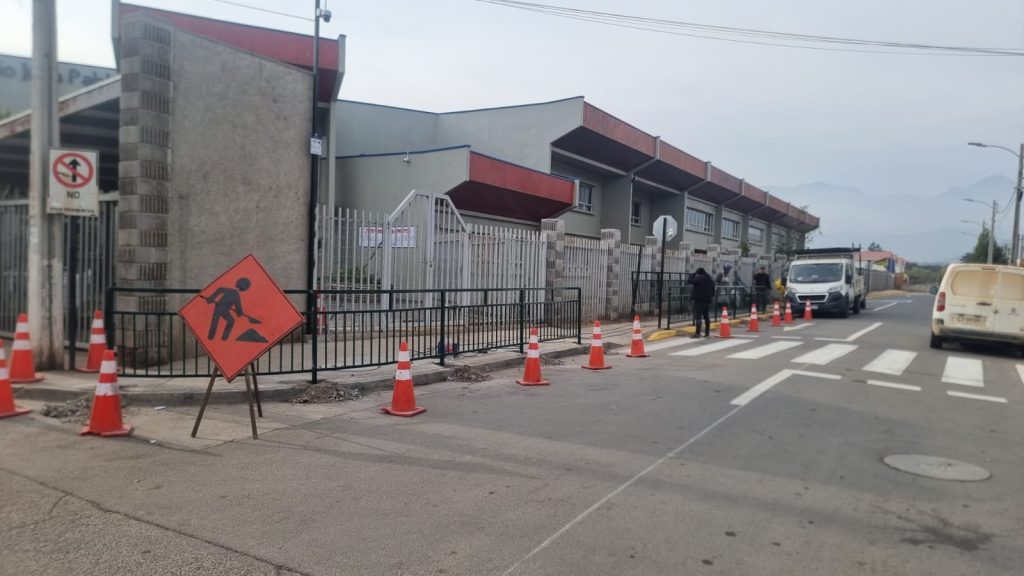
Before implementing the interventions, road safety conditions were assessed around both schools. Improvements were then carried out, including pedestrian crossings, vertical and horizontal road markings and signage, tactical urbanism measures, pedestrian safety barriers, and parking lot adjustments.
Once the work was completed, a second SR4S assessment showed improvements at both schools:
Juan Pablo II School, Nogales
- Before: 4.5 stars
- After: 5.3 stars
- Improvement: 0.8 stars
General José Velásquez Bórquez School, Puchuncaví
- Before: 4.1 stars
- After: 5.1 stars
- Improvement: 1 star
These results provide evidence that road safety conditions around both schools improved following the interventions.
An Evidence-Based Model
Safety Is Cool follows a structured process to identify risks, take action and evaluate results:
Measure → Design → Intervene → Educate → Measure Again
This approach makes it possible to identify what works, apply lessons learned to future interventions and extend the program’s benefits to more communities.
The project was made possible through the collaboration of the Aleatica Foundation for Road Safety, Aleatica’s Nogales–Puchuncaví Concession, the Automobile Club of Chile, CONASET, iRAP, FIA Foundation and the Child Health Initiative (CHI).
What’s Next?
The experience and lessons learned in Nogales and Puchuncaví will help guide the program’s expansion to two additional schools associated with the Puente Industrial Concession in Chile’s Biobío Region, further extending its reach across the country.
In Mexico, Safety Is Cool also continues to make progress, with interventions underway at at least 12 additional schools this year.
In this way, a model that originated in Mexico is crossing borders, incorporating lessons learned across different communities, and demonstrating its ability to adapt and scale to benefit even more people.
We are road safety!